


The Challenge
As Thailand’s automated retail market accelerated, BosTech Engineering faced growing operational challenges during rapid expansion.
Despite its strong engineering foundation, the company encountered three major obstacles:
1. Fragmented Device Ecosystem
BosTech operated a highly diverse fleet of vending equipment, including:
- Refurbished Japanese Fuji vending machines
- Coffee vending machines
- Instant noodle vending machines
- Fresh orange juice machines
- Popcorn vending machines
- Ice cream vending machines
Each machine type ran on different software systems, making centralized management nearly impossible.

2. Outdated Cash-Only Payment Infrastructure
Many legacy vending machines only supported cash and coin payments, while Thailand’s QR payment ecosystem rapidly became the dominant consumer payment method.
3. Lack of Unified Retail Operations Software
Bostech lacked a centralized operational backend for:
- Inventory and warehouse management
- Remote software version control
- Membership and loyalty operations
- Automated financial reconciliation
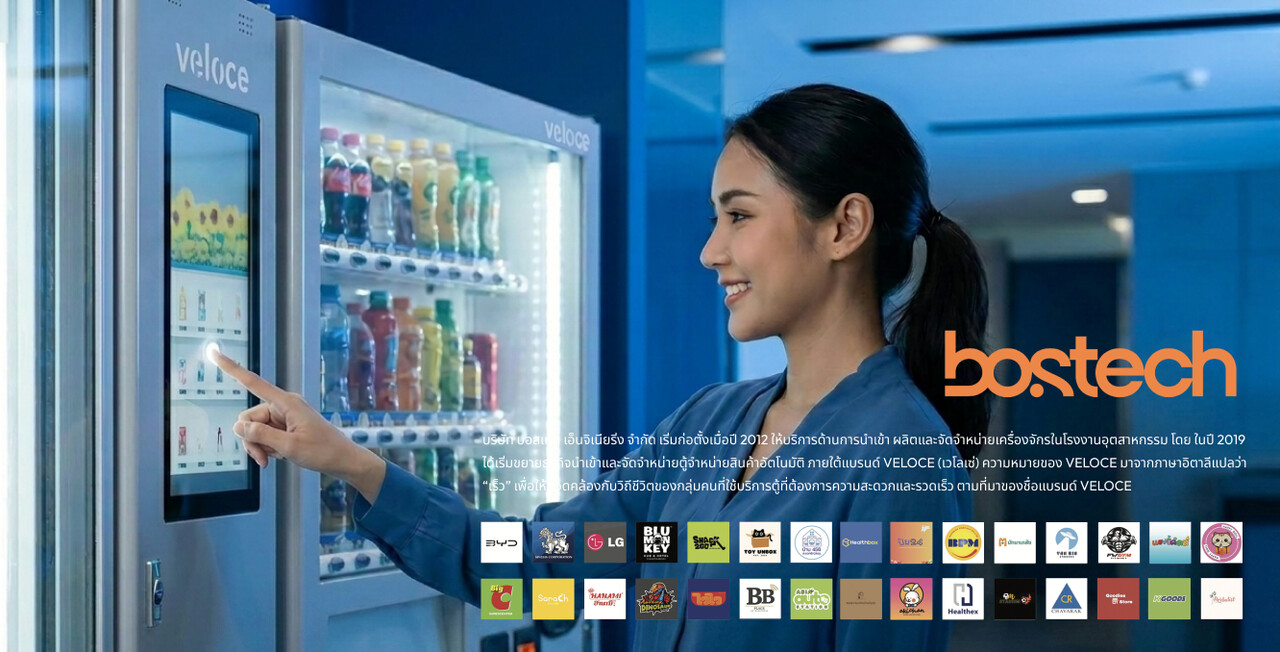
The challenge became even more critical because BosTech was not only operating its own vending machines, but also providing managed vending services for enterprise customers including BYD and Big C.
The Solution: One Unified Platform for Every Machine
Instead of replacing existing hardware, we designed a phased modernization strategy focused on:
- Preserving existing machine assets
- Standardizing software infrastructure
- Integrating Thailand’s local payment ecosystem
- Building scalable operational capabilities for both BosTech and its clients
Phase 1: Hardware Retrofit for Legacy Japanese Vending Machines
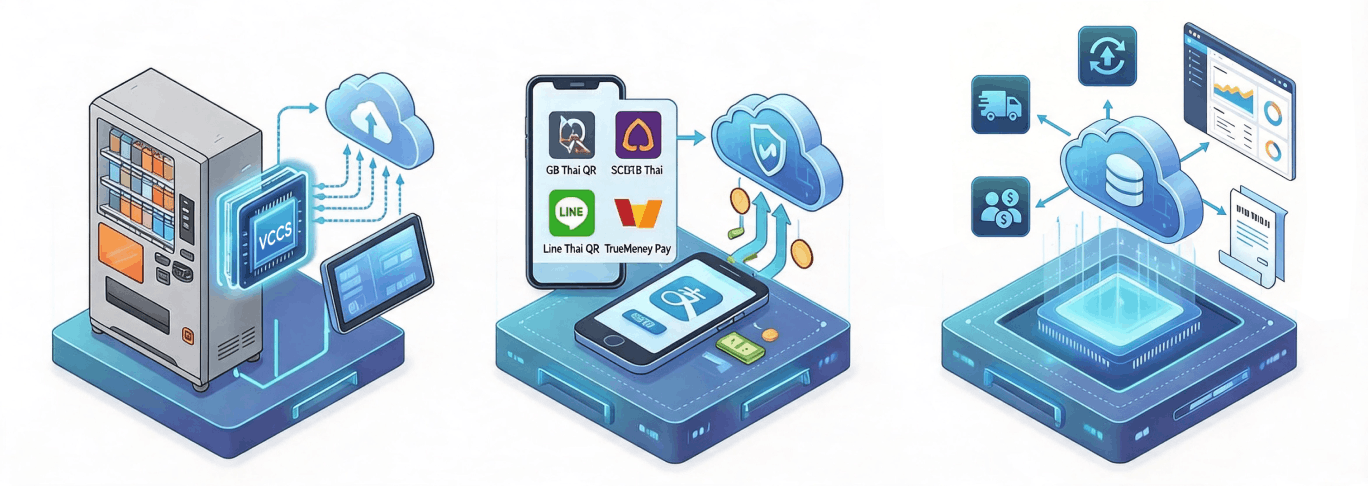
To modernize second-hand Japanese vending machines such as Fuji models, we upgraded the machines with smart retail communication infrastructure.
- Smart Android Touchscreen Upgrades
- VCCS Integration
- Unified Software Migration for New Machines
What Is VCCS?
A communication protocol standard widely used in Japanese vending machines. VCCS typically connects:
• Card readers;
• Cash/payment modules;
• Telemetry systems;
• Main control boards.
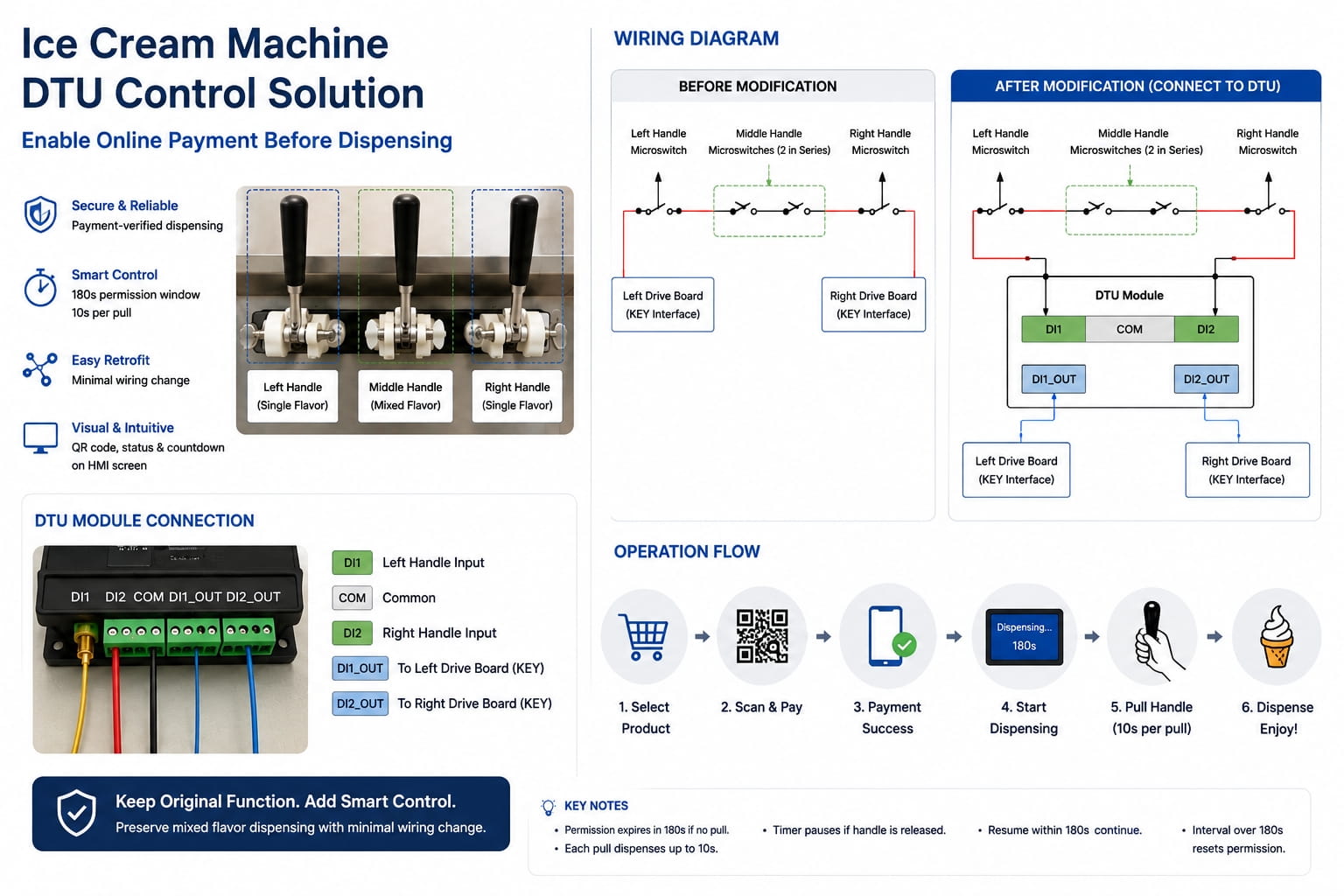
Phase 2: Direct Integration with Thailand’s QR Payment Ecosystem
To support Thailand’s rapidly growing cashless economy, we directly integrated multiple mainstream Thai QR payment channels.
Integrated payment methods included:
- GB Thai QR
- SCB Thai QR
- LINE Thai QR
- TrueMoney Pay QR
Consumers can now complete purchases instantly through QR code payments without relying on cash or coins.
Phase 3: Building Scalable Retail Operations Infrastructure
To support long-term growth and enterprise operations, we planned and gradually deployed several core operational systems.
- Warehouse & Inventory Management
- Unified OTA Software Management
- Multi-Tenant Financial Reconciliation System
Results
Within months of deployment, BosTech Engineering achieved significant operational improvements across its automated retail business.
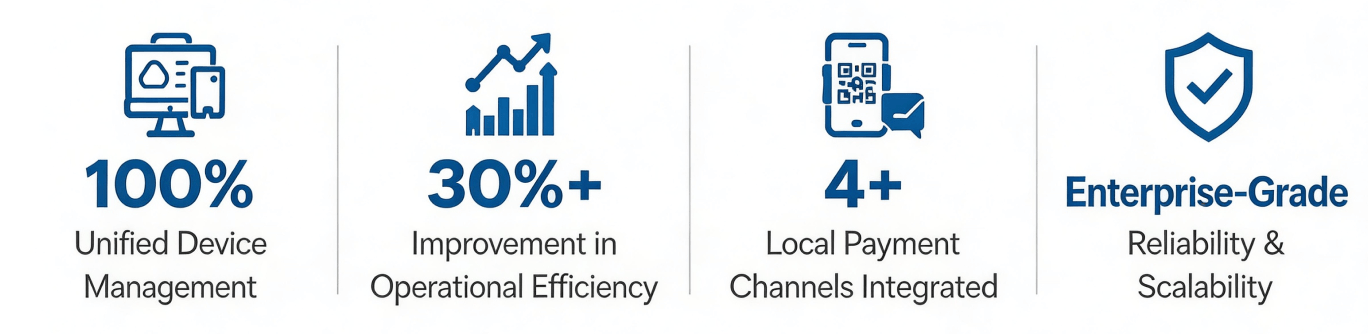
- 100% of heterogeneous vending equipment — including refurbished Fuji machines, orange juice machines, and noodle vending machines — unified under one management platform
- Successful integration with 4+ major Thai QR payment channels
- Estimated 30%+ operational efficiency improvement through automation in logistics, replenishment, and reconciliation
- Enterprise-grade reconciliation support for customers including BYD and Big C
“Our biggest challenge used to be fragmented machine systems and unstable payment operations. After the upgrade, we can monitor every machine from one centralized dashboard, and QR payments are much smoother for consumers. More importantly, we can now provide standardized reconciliation reports to clients like BYD and Big C, which has significantly increased their trust in our services. We’re no longer just managing machines — we’re helping our customers operate more successfully.”
— Mr. Li, Founder, BosTech Engineering
Looking Ahead: From Machine Operator to Smart Retail Infrastructure Provider
Following the successful platform modernization, BosTech plans to further expand its smart retail capabilities.
Future initiatives include:
AI-Powered Smart Replenishment
Automatically generating replenishment recommendations based on:
- Sales data
- Weather conditions
- Seasonal trends
- Holidays
Membership & Loyalty Ecosystem
Cross-device loyalty points and personalized promotions across vending networks.