Bringing an industrial hardware product into the US healthcare market involves much more than finding a manufacturer and placing an order.
The equipment must meet demanding functional requirements, integrate seamlessly with the customer's software environment, and satisfy applicable electrical, wireless, and data security requirements.
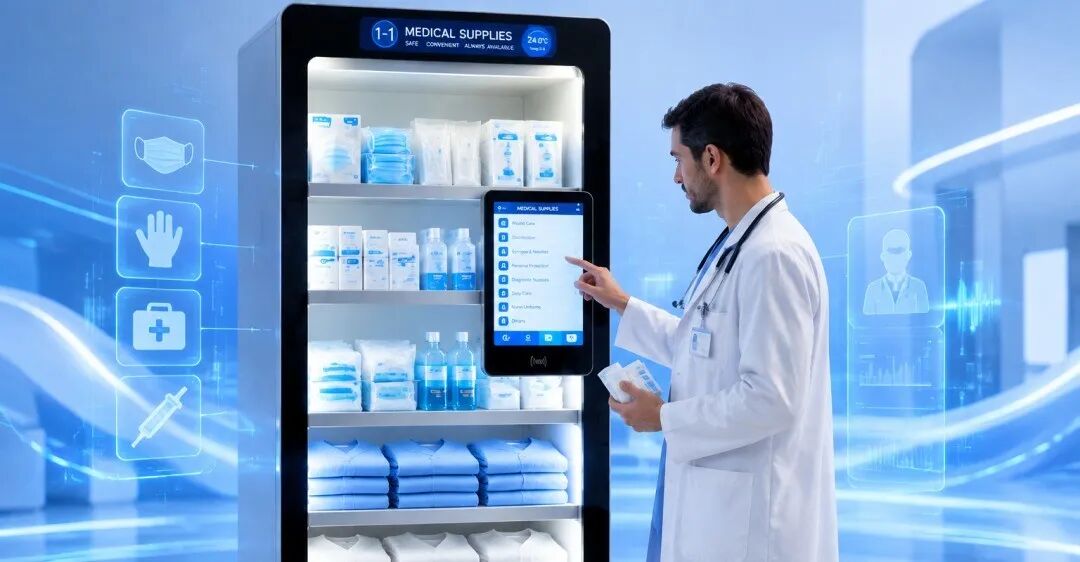
This was the challenge facing a US healthcare customer looking to upgrade its RFID smart cabinet infrastructure for hospital departments.
VendSolution was engaged as the technology and hardware integration partner, helping bridge the gap between the customer's requirements and the manufacturing supply chain.
Rather than simply supplying a cabinet, our role was to coordinate the complete solution: hardware sourcing, customization, software integration, technical validation, and compliance planning.
Here's how we approached the project.
1. Understanding the Customer's Requirements
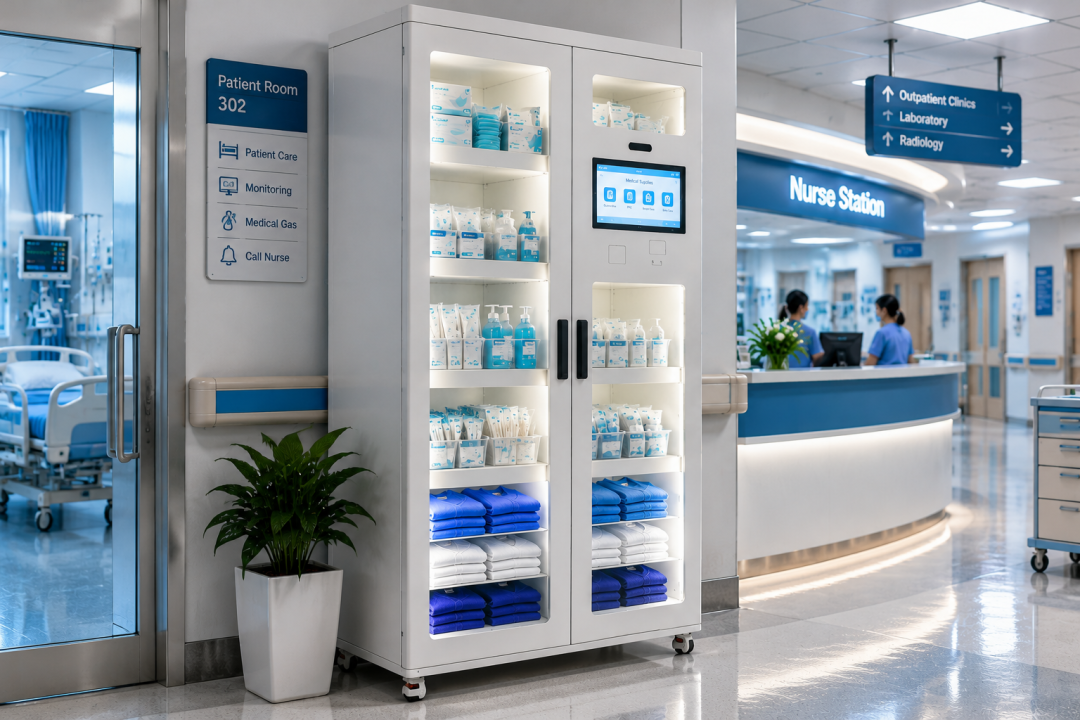
The customer operates in the US healthcare sector, where nurses need quick and reliable access to medical supplies and other essential items within hospital departments.
The customer already had hundreds of traditional locker cabinets in operation. However, the existing hardware and underlying systems could not be easily upgraded, leaving the customer dependent on a third-party solution.
They wanted greater control over their infrastructure, with three key priorities:
• Remote management and upgrades: The ability to maintain and update machines remotely.
• Proactive fault monitoring: Timely alerts to identify potential problems and reduce operational disruption.
• Consistent hardware quality: Reliable equipment capable of meeting demanding hospital operating conditions.
The requirement was not simply to purchase new RFID cabinets. It was to establish a hardware and software solution that the customer could independently manage and scale.
2. Our Approach: Integrating Software, Hardware, and Manufacturing
VendSolution operates as a software and hardware integration partner rather than a hardware manufacturer.
For this project, we structured the solution around three components:
• Customized software: Tailored software integration to meet the customer's operational and management requirements.
• Integration services: Technical coordination, supplier evaluation, hardware adaptation, and system integration.
• Core hardware components: A defined bill of materials (BOM), allowing the customer to purchase key components directly from VendSolution or from third-party suppliers.
This approach gives the customer greater flexibility in hardware sourcing while maintaining control over the software and system architecture.
The first step was to identify a suitable manufacturing partner.
We evaluated potential suppliers based on existing products, hospital deployment experience, technical documentation, pricing, product videos, export capabilities, and available certifications.
One manufacturer had already deployed similar cabinets in several hospitals, with its longest-running installation operating for approximately one year.
Although this provided a useful starting point, the manufacturer was still at an early stage of development. It lacked overseas market experience, relevant international certifications, and full BOM transparency.
Rather than abandoning the opportunity, we worked from its existing product foundation to develop a customized solution aligned with the US customer's requirements.
3. Three Critical Challenges in Preparing the Hardware for the US Market
Challenge 1: Functional Reliability in Hospital Environments
Hospital supply cabinets operate under demanding conditions. Accuracy, speed, and reliability are essential.
The project established stringent functional acceptance criteria:
• RFID reading accuracy approaching 100%.
• Inventory counting for 1,000 items within three seconds.
• Reliable reading under full-load conditions.
• Consistent performance even when RFID tags are partially obstructed by aluminum foil.
• Accurate identification when cabinet doors are not completely closed.
• Locking mechanisms that remain in a safe, controlled state during power interruptions.
These requirements go beyond standard vending or storage applications.
Before shipment, prototype cabinets must undergo simulated extreme-condition testing. This includes testing with fully loaded cabinets, partially obstructed RFID tags, and doors left slightly open.
Two engineering requirements are particularly important:
Reliable RFID reading with imperfect door closure. The system must maintain reading reliability even when the cabinet door has a small gap.
Fail-safe locking behavior. Power interruptions must not cause uncontrolled locking or unlocking.
These are essential acceptance criteria for equipment intended for sensitive healthcare environments.
Challenge 2: Hardware and Software Integration
A cabinet that works independently is not necessarily a cabinet that works within the customer's existing software ecosystem.
Hardware compatibility was therefore a key supplier selection criterion.
We evaluated not only the cabinet's physical design, but also its communication interfaces, RFID reader compatibility, electronic locking mechanisms, and integration possibilities.
The objective was to ensure that the customized hardware could work with VendSolution's software architecture and support the customer's remote management requirements.
This included consideration of:
• Hardware and software communication interfaces.
• Remote monitoring and firmware upgrade capabilities.
• Fault reporting and diagnostic information.
• RFID reader and antenna performance.
• Locking and access-control integration.
By coordinating the hardware manufacturer and software requirements from the beginning, we could identify potential compatibility issues before moving further into production.
Challenge 3: US Electrical, Wireless, and Data Security Requirements
Regulatory compliance is another major consideration when preparing connected hardware for the US market.
The applicable certification requirements depend on the equipment configuration and the wireless technologies used.
For this project, the key areas under evaluation include:
Compliance areaRelevant requirementPurposeElectrical safetyUL certification, as applicableElectrical product safetyWireless equipmentFCC certificationUS radio-frequency regulatory requirementsCellular connectivityCarrier certification and approvalCompatibility with US mobile networksCellular device compatibilityPTCRB, where applicableDevice interoperability and network compatibility
Identifying the correct certification pathway requires understanding the actual hardware configuration.
For example, a cabinet with a wireless communication module may require a different certification combination from a cabinet without one.
Once the applicable requirements are identified, the manufacturer may need to modify the hardware design and components to meet the relevant standards.
Data security is equally important.
Healthcare-related information can be sensitive, particularly when inventory and patient-related information are involved.
The software solution must therefore address relevant HIPAA requirements and incorporate appropriate safeguards, including:
• Encryption of data in transit and at rest.
• Role-based access control.
• Detailed operational audit logs.
• Controlled access to sensitive information.
These requirements need to be considered as part of the software architecture, rather than added as an afterthought.

4. Engineering Details Matter: Quality Beyond the Specifications
One of the biggest challenges in this project was finding manufacturers capable of meeting the customer's expectations for build quality.
The US customer placed particular emphasis on material strength, component reliability, and manufacturing workmanship.
Several specifications were established for the customized cabinet:
ComponentProject requirementCabinet sheet metal1.5 mm galvanized steelRFID readersEstablished, quality-backed manufacturersRFID antennasHigh-performance antenna modelsElectronic locksFail-safe electric hook locksDrawer slidesHeavy-duty, load-bearing modelsHingesAdjustable, anti-sag hingesFastenersNo exposed screwsWeldingSmooth, finished weld points
These details may seem minor, but they can directly affect long-term reliability.
For example, insufficient sheet-metal thickness can lead to deformation during long-distance shipping, potentially causing cabinet doors to sag or scrape against the frame.
Poorly finished screws or welding points can create unnecessary safety risks in a hospital environment.
We rejected suppliers and components that did not meet the required standards, including products with poor workmanship or insufficient quality assurance.
The process required additional time and coordination, but selecting the right components and manufacturing partner was essential to the project's long-term objectives.
5. The Value of a Hardware Integration Partner
This project demonstrates why entering a new market requires more than access to a manufacturing supply chain.
For the customer, the objective is to obtain a reliable, customizable RFID cabinet solution with greater control over its hardware and software infrastructure.
For the manufacturer, the project creates an opportunity to upgrade product design, manufacturing quality, and export readiness.
For VendSolution, our role is to connect these requirements through technical coordination, software integration, supplier evaluation, and hardware customization.
The value lies in translating a customer's expectations into specifications that manufacturers can understand, implement, and validate.
This is particularly important in markets such as healthcare, where product requirements are demanding and the consequences of equipment failure can be significant.
6. From Manufacturing to Global Deployment
Manufacturing a product and preparing it for a highly regulated overseas market are two different challenges.
Between the two lie several important steps:
• Translating customer requirements into engineering specifications.
• Identifying and qualifying the right manufacturing partners.
• Customizing hardware to meet local operating conditions.
• Integrating hardware with software platforms.
• Identifying and addressing applicable certification and compliance requirements.
• Validating product performance before deployment.
VendSolution has spent more than 13 years working on connected equipment and centralized management systems.
This project extends that experience beyond software delivery into a more comprehensive hardware integration role.
We believe the future of connected retail and industrial equipment will depend not only on smarter software, but also on reliable hardware, flexible supply chains, and the ability to adapt products to local market requirements.
From manufacturer selection to global deployment, VendSolution helps turn complex hardware and software requirements into integrated solutions.
If you are looking for a technology partner to support RFID cabinets, smart lockers, connected machines, or customized unattended retail solutions, get in touch with our team.
VendSolution — Connecting Hardware, Software, and Intelligent Operations.