

A machine being online doesn't mean operations are easy.
When Android-powered machines are distributed across hundreds or thousands of locations, the real challenge is rarely seeing an alert.
The difficult part is figuring out what happened, why it happened, what to do next, and whether the issue has actually been resolved.
A communication failure may involve network connectivity, machine processes, serial protocols, file accumulation, or system resources. A storage alert may be only the visible symptom of a deeper operational issue.
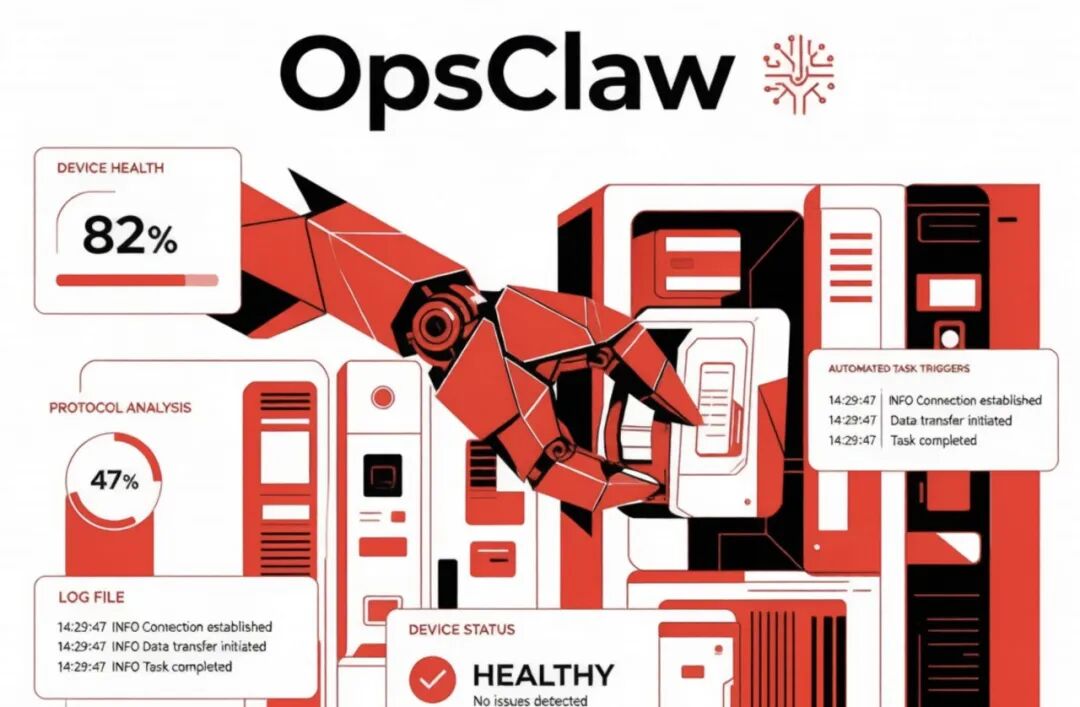
This is where OpsClaw, VendSolution's AI-powered operations platform, comes in.

From Machine Alerts to Actionable Diagnosis
OpsClaw is designed for remote operations and maintenance of Android-powered machines.
Instead of simply generating alerts, it brings machine status, diagnostic evidence, analysis, and recommended actions into a connected workflow.
Key capabilities include:
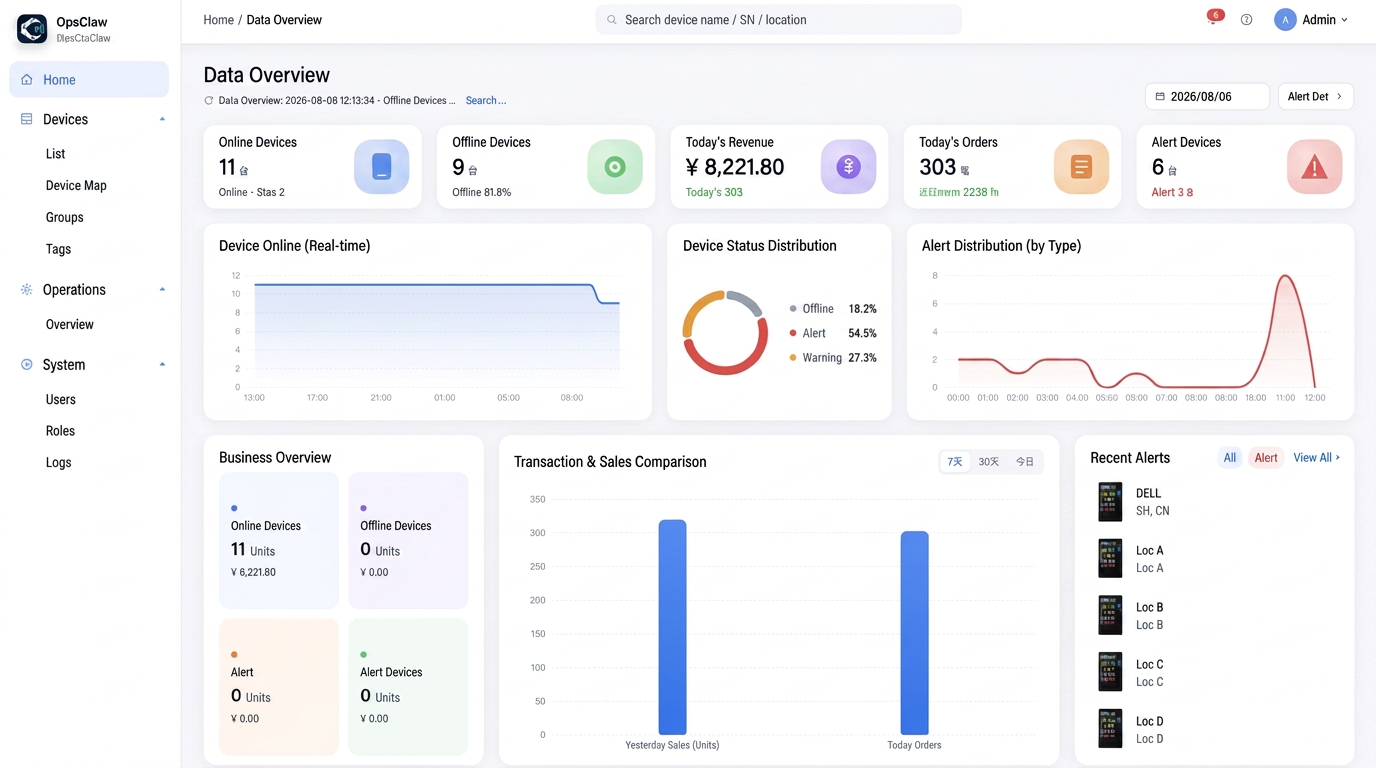
- Machine health monitoring — Track storage, CPU, memory, temperature, and other key indicators.
- Remote evidence collection — Retrieve machine files and logs remotely with appropriate authorization.
- Protocol analysis and remote debugging — Assist with communication protocol analysis, serial debugging, and Shell-based troubleshooting.
- AI-assisted fault analysis — Organize root-cause analysis, supporting logs, and recommended actions in one place.
- Controlled automation — Automate clearly defined, authorized operational tasks based on rules and thresholds.
The goal is simple: shorten the path from detecting an issue to understanding and resolving it.
Four Layers of AI-Powered Operations
OpsClaw brings several operational capabilities together in one platform.
AI Training & Data Management
Manage training tasks and datasets in a centralized environment, with visibility into task status, progress, and tool activity.
Intelligent Operations Assistant
Bring machine performance, sales trends, inventory signals, and environmental factors into a single view to provide operational insights and action cues.
Visual Automation
Connect triggers, verification steps, authorized actions, and execution records through visual workflows.
This makes automation easier to understand, review, and control.
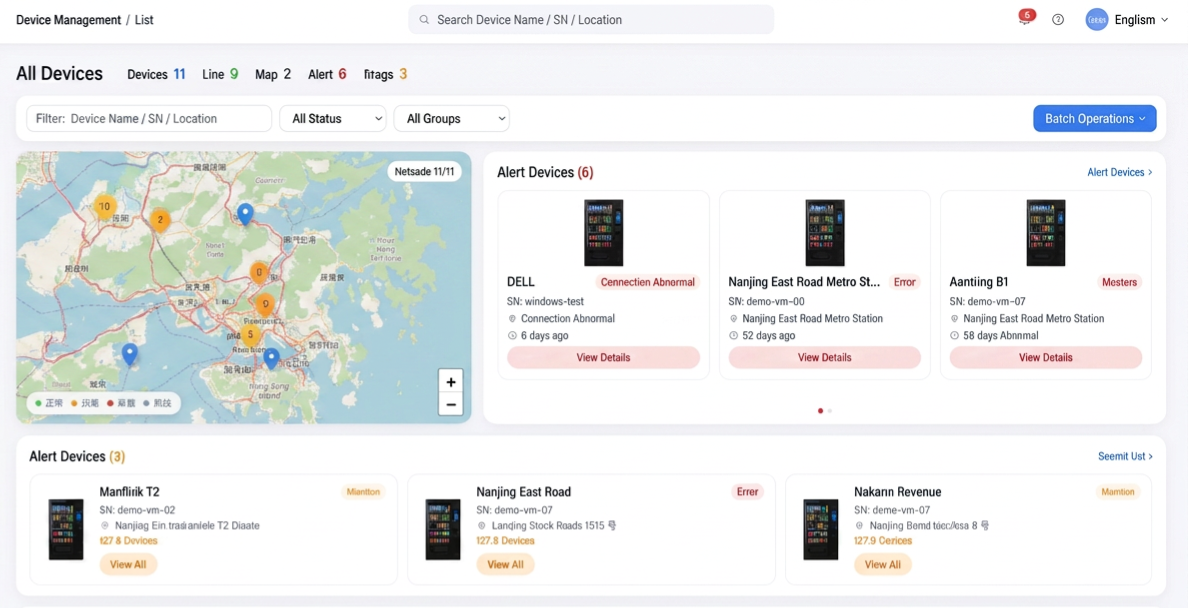
Machine Health & Alerts
Monitor real-time and predictive alerts, organize them by priority, and connect detection with confirmation and work-order processes.
Predictive signals are designed to support engineering judgment—not replace it.
From Storage Alert to Recovery
Consider a typical storage issue.
When storage usage reaches a high-risk level, OpsClaw can generate an alert and present relevant information such as partition capacity, remaining space, potential impact, and recommended actions.
After the issue is addressed, the system can continue monitoring the machine and identify when storage usage returns to a safe range.
The important part is not a single metric.
It is the complete operational loop:
Detect → Diagnose → Act → Verify
This creates a traceable process rather than leaving operators with an isolated alert.
AI Diagnosis Should Be Explainable
AI-powered operations should not simply return:
"Network communication failed."
Operators need to know why.
In communication failure scenarios, OpsClaw separates:
- Diagnosis
- Root-cause analysis
- Supporting evidence and logs
- Recommended actions
This allows non-technical teams to understand the issue and its priority, while engineers can continue drilling into the underlying evidence and determine the appropriate action.
The result is a more collaborative troubleshooting process—with less reliance on a black-box conclusion.
AI-Assisted, Not AI-Uncontrolled
The goal of AI operations is not to hand over unlimited control of physical machines to an AI model.
A reliable approach requires clear boundaries.
AI helps understand and recommend.
Rules define authorized actions.
Engineers provide approval and handle exceptions.
Permissions, audit trails, human confirmation, and rollback mechanisms remain important parts of the workflow.
This approach allows teams to automate repetitive operations while maintaining appropriate control over connected machines.
Making Every Troubleshooting Experience Reusable
One of the biggest opportunities in AI-powered operations is turning individual troubleshooting experiences into reusable operational knowledge.
The evidence collected during an incident, the actions taken, and the final result can become part of a knowledge base for future issues.
Over time, this can help operations teams move from:
"We have seen this problem before."
to:
"We know how to handle this problem."
The Next Step for Intelligent Operations
Unattended retail is becoming increasingly connected. Vending machines, smart coolers, beverage equipment, and other retail terminals are no longer isolated machines—they are distributed operational assets.
As machine fleets grow, traditional monitoring alone is not enough.
OpsClaw is being developed around a simple principle:
Make complex machine problems easier to understand, repetitive operations easier to execute, and every troubleshooting experience easier to reuse.
AI should not replace the operations team.
It should make the operations team faster, more informed, and more scalable.